

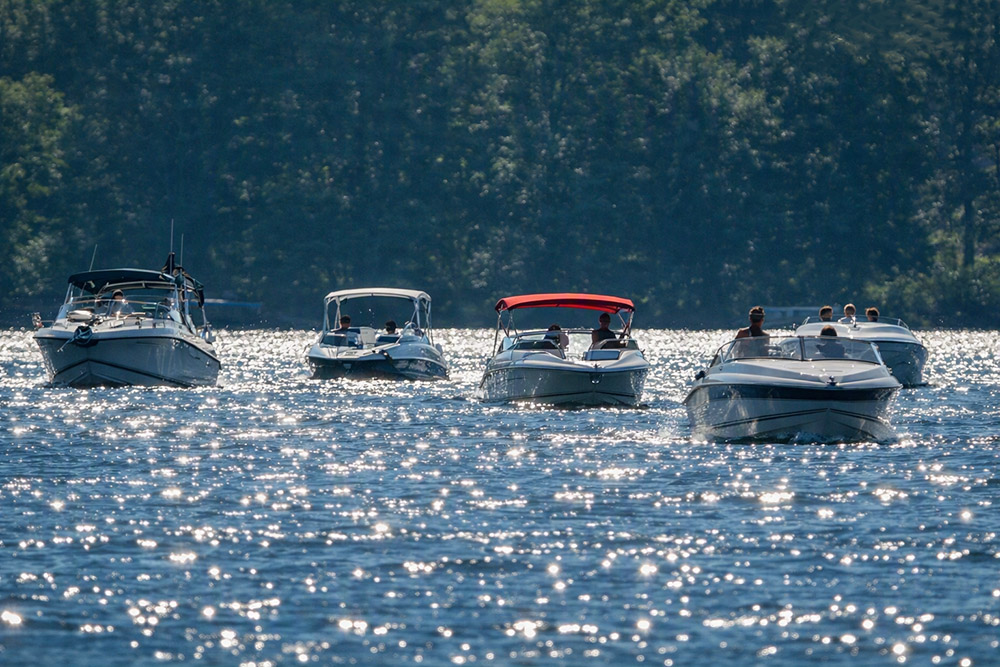
A busy summer weekend can completely change the feel of a Northeast lake. Boats are running, wakes are hitting the shoreline, and areas that were quiet at sunrise may be crowded by midday.
For anglers planning bass fishing in Northeast lakes, that raises an important question: does heavy boat traffic actually stop bass from biting?
Not necessarily. Bass usually do not disappear because boats arrive, but increased noise, wakes, fishing pressure, and water disturbance can change where they hold and how willing they are to feed.
Bass Often Move Rather Than Leave the Area
Bass may simply move away from exposed areas and settle closer to cover, deeper structure, or quieter sections of the lake.
Largemouth bass may push tighter into weeds, docks, submerged wood, or shaded cover. Smallmouth bass may move along rocky breaks, deeper points, or offshore structure where they feel less exposed.
Learning how the two species use different habitats can make these changes easier to recognize. Our guide on What is the Difference Between Fishing Northern Largemouth and Smallmouth in Spring? explains some of those habitat differences in more detail.
Why Do Busy Lakes Become Harder to Fish?
Repeated wakes disturb shallow water, especially around docks, weed lines, rocky banks, and flats. Boats can also increase underwater noise and activity, while recreational traffic may make already-clear lakes feel even more pressured.
The fish may still be nearby, but they can become less predictable.
That is why experienced northeast bass fishing guides often adjust location and presentation rather than simply leaving the lake.
Should You Move Deeper When Boat Traffic Increases?
On warm summer lakes, bass may already be using deeper structure before boat traffic becomes heavy. If activity increases on the surface, offshore points, ledges, humps, and deeper weed edges can become even more attractive.
This is particularly useful when a lake has developed a thermocline.
Instead of fishing the deepest water available, anglers should identify where suitable oxygen, temperature, baitfish, and structure overlap. Our article on How Do You Find Bass Fishing Above the Thermocline in Northeast Lakes? explains how to narrow down that productive depth zone.
However, largemouth may still remain shallow if there is enough thick vegetation or other cover available.
Is Early Morning Better on Busy Northeast Lakes?
If you know a lake receives heavy recreational boating, fishing early can give you several advantages. Boat traffic is usually lighter, shallow areas may be calmer, and bass can be more comfortable feeding around shoreline cover.
Early morning also gives you time to work points, docks, flats, and weed edges before wakes and boating activity increase.
For anglers planning a bass fishing trip in Northeast waters, choosing the right time of day can sometimes be just as important as choosing the lake itself.
Our article What is the Best Time to Catch bass fishing in Northeast? provides a broader look at seasonal and daily timing.
What About Evening and Night Fishing?
As recreational traffic drops, shorelines and shallow cover may become quieter again. Bass that spent the afternoon deeper or tighter to cover may become more willing to move and feed.
Summer anglers sometimes extend their fishing into the first few hours after sunset for this reason.
If that approach interests you, see What time at night is best for bass fishing in Northeast? for a closer look at low-light timing and night-fishing considerations.
Change Your Lure Presentation Before Changing Lakes
If bass are pressured or holding tightly to cover, slowing down can help. Soft plastics, finesse jigs, drop-shot rigs, and smaller swimbaits allow you to work productive areas more carefully.
At other times, moving water created by wind and boat wakes can make reaction baits useful around active fish.
The key is watching how the fish respond.
If several bass follow a lure but refuse to strike, downsizing or slowing the retrieve may be more effective than immediately moving elsewhere.
Look for Quiet Water Other Anglers Ignore
Try checking:
- Protected coves
- Backwater sections
- Areas beyond major boating routes
- Offshore structure away from popular beaches
- Deep weed edges
- Points outside heavily used channels
A current northeast fishing report can help identify general patterns, but actual conditions on the day matter more than yesterday’s report.
Wind direction, cloud cover, water temperature, and boating activity can all change where fish are holding.
Does Boat Traffic Affect Every Lake the Same Way?
A large reservoir with deep water and plenty of offshore structure will respond differently than a small Massachusetts pond.
Fish in lakes that receive regular recreational traffic may also become accustomed to routine boat movement. In less-busy waters, sudden activity may cause a more noticeable change in positioning.
This is why a northeast fishing tour on an unfamiliar lake can benefit from local knowledge. Guides who regularly fish the same water can often recognize which areas stay productive even when weekend traffic increases.
What Massachusetts Anglers Should Check Before Fishing
Black bass regulations, fishing licenses, water-specific restrictions, boating requirements, and access rules should always be checked before your trip. Some reservoirs, boat ramps, parks, and individual lakes may also have their own operating or boating restrictions.
Massachusetts generally regulates largemouth and smallmouth bass together as black bass, but anglers should always confirm the current rules for the specific waterbody they intend to fish.
Can You Still Catch Bass on a Crowded Lake?
Heavy boat traffic can make bass fishing more challenging, but it does not automatically ruin the day.
Instead of fighting the busiest conditions, adjust with them. Fish early, explore quieter areas, pay attention to deeper structure, slow down when fish become pressured, and reconsider where bass may have moved.
For many anglers, successful fishing on busy Northeast lakes comes from understanding how fish respond to changing conditions rather than expecting them to remain in the same spot all day.