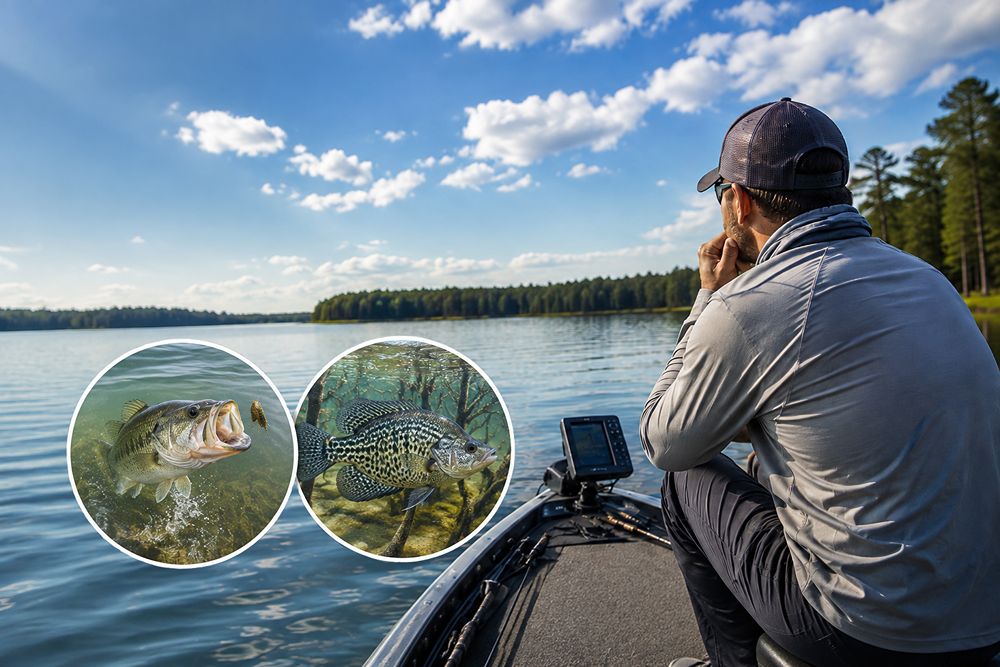
Finding bass above the thermocline can make summer fishing much more efficient in deeper Northeast lakes. Instead of searching every depth, you can focus on the part of the water column where temperature, oxygen, baitfish, and bass are more likely to overlap.
For anglers interested in Bass Fishing in Northeast lakes, the key is understanding that the thermocline is not simply a depth line on a fish finder. It is a transition zone that influences where fish can comfortably spend time during summer.
First, What Is a Thermocline?
The upper layer is warmer and usually receives more oxygen from the atmosphere and wind. Below it is a transition zone where water temperature drops more quickly. This transition is the thermocline.
In some stratified lakes, deeper water below this zone can gradually become low in dissolved oxygen. Massachusetts environmental studies have documented thermoclines and reduced oxygen levels in deeper portions of certain lakes.
That is why bass do not always move deeper simply because surface temperatures rise.
Why Would Bass Stay Above the Thermocline?
In summer, Massachusetts guidance recommends targeting smallmouth in deeper water where larger fish seek cooler conditions, while largemouth can still remain relatively shallow and actively feed.
The important point is that “deeper” does not automatically mean “on the bottom.”
If the thermocline is at 20 feet in a 45-foot lake, for example, productive fish may be suspended around 12 to 20 feet rather than sitting in the deepest basin.
The actual thermocline depth varies from one lake to another, so anglers should not assume a fixed number.
Start by Finding the Thermocline
On some fish finders, the thermocline may appear as a faint horizontal band stretching across the screen. You may also notice baitfish and larger fish consistently stopping above a similar depth.
If your electronics do not clearly show it, look for another clue: a repeated depth pattern.
If nearly every bait ball and bass mark appears between 14 and 18 feet while the lake reaches 40 feet, there is probably a reason the fish are avoiding the deeper water.
Massachusetts Wildlife’s Go Fish MA! resources also provide bathymetric depth information for many Massachusetts waters, which can help anglers identify deep basins, drop-offs, and other areas before fishing them.
Fish Structure That Intersects the Right Depth
Look for structure that reaches into the productive water column.
Good places to check include:
- Main-lake points
- Humps
- Steep rocky banks
- Ledges
- Deep weed edges
- Submerged islands
- Drop-offs beside shallow flats
Imagine the thermocline is around 18 feet. A point that falls from 6 feet to 16 feet before dropping into 35 feet may be much more useful than a feature sitting entirely below 25 feet.
This is where understanding Bass in Northeast Lake environments becomes especially valuable. Bass often use structure as a travel route while remaining within comfortable water.
Watch the Baitfish Before You Chase Bass
If schools of forage consistently suspend above the thermocline, predators often have a reason to stay nearby.
Rather than immediately casting toward the bottom, note how high the bait is sitting.
A school holding at 15 feet over 30 feet of water may attract suspended smallmouth or roaming largemouth. Your presentation should stay close to that level instead of dropping several yards underneath the fish.
Largemouth and Smallmouth May Use It Differently
Smallmouth bass
Rocky points, offshore humps, and sharp breaks that meet the thermocline can therefore become strong areas to investigate.
Largemouth bass
They may remain around shallow vegetation, docks, shaded cover, or weed edges even during summer. If those shallow areas provide enough oxygen, food, and shade, moving offshore may not be necessary.
If you want a closer comparison between the two species, read What is the Difference Between Fishing Northern Largemouth and Smallmouth in Spring? Although it focuses on spring, it helps explain why largemouth and smallmouth often respond differently to habitat.
Should You Fish Directly on the Thermocline?
Think of the thermocline as a boundary rather than an exact target.
Start a little above it and work upward until you locate fish. Bass may suspend several feet above the transition, particularly when following bait.
Vertical presentations, drop shots, swimbaits, jigs, and slowly worked soft plastics can all help keep a lure at a controlled depth.
The biggest mistake is letting every lure fall straight to the bottom even though the fish are suspended higher.
Does Time of Day Still Matter?
Early morning and evening can bring bass toward feeding areas, while bright midday conditions may push some fish toward deeper structure, shade, or offshore cover.
If you prefer fishing after sunset, our guide on What time at night is best for bass fishing in Northeast? explains how evening and nighttime activity can change where you should concentrate your effort.
Season also matters. The thermocline is mainly a warm-season consideration in lakes that stratify.
For a broader seasonal perspective, see What is the Best Time to Catch bass fishing in Northeast?
Do All Northeast Lakes Develop a Thermocline?
Shallow lakes that are regularly mixed by wind may not develop a strong or stable thermocline.
Massachusetts also notes that shallow, weedy ponds can experience oxygen problems during warm periods because warmer water holds less dissolved oxygen and aquatic vegetation consumes oxygen at night.
This means depth alone cannot tell you where the healthiest water is.
Local knowledge, current Northeast Fishing Reports, electronics, weather, and lake type should all be considered together.
Massachusetts Fishing Rules to Check
The statewide daily limit is five fish in combination, with a minimum length of 12 inches. Individual waters can have special regulations, so always check the exact lake before fishing.
Anglers age 15 and older generally need a Massachusetts freshwater fishing license, with exemptions and free-license categories applying to certain residents.
If you are planning a Northeast Fishing Trip or Tour, also confirm access rules, ramp hours, boating requirements, and any waterbody-specific restrictions.
A Better Way to Approach Summer Bass
Find the depth where temperature and oxygen conditions change, identify structure that intersects the productive zone, watch where baitfish are holding, and keep your lure at the same level as the fish.
For anglers unfamiliar with a lake, Northeast Fishing Guide Services or contact experienced Northeast Fishing Guides can also help shorten the learning curve by identifying seasonal structure and productive depth ranges.
For a broader introduction to the region, you can also read Is northeast good for bass fishing? which covers species, timing, trip planning, and Massachusetts regulations.